
Hydrostatic vs. Torque Converter Transmissions
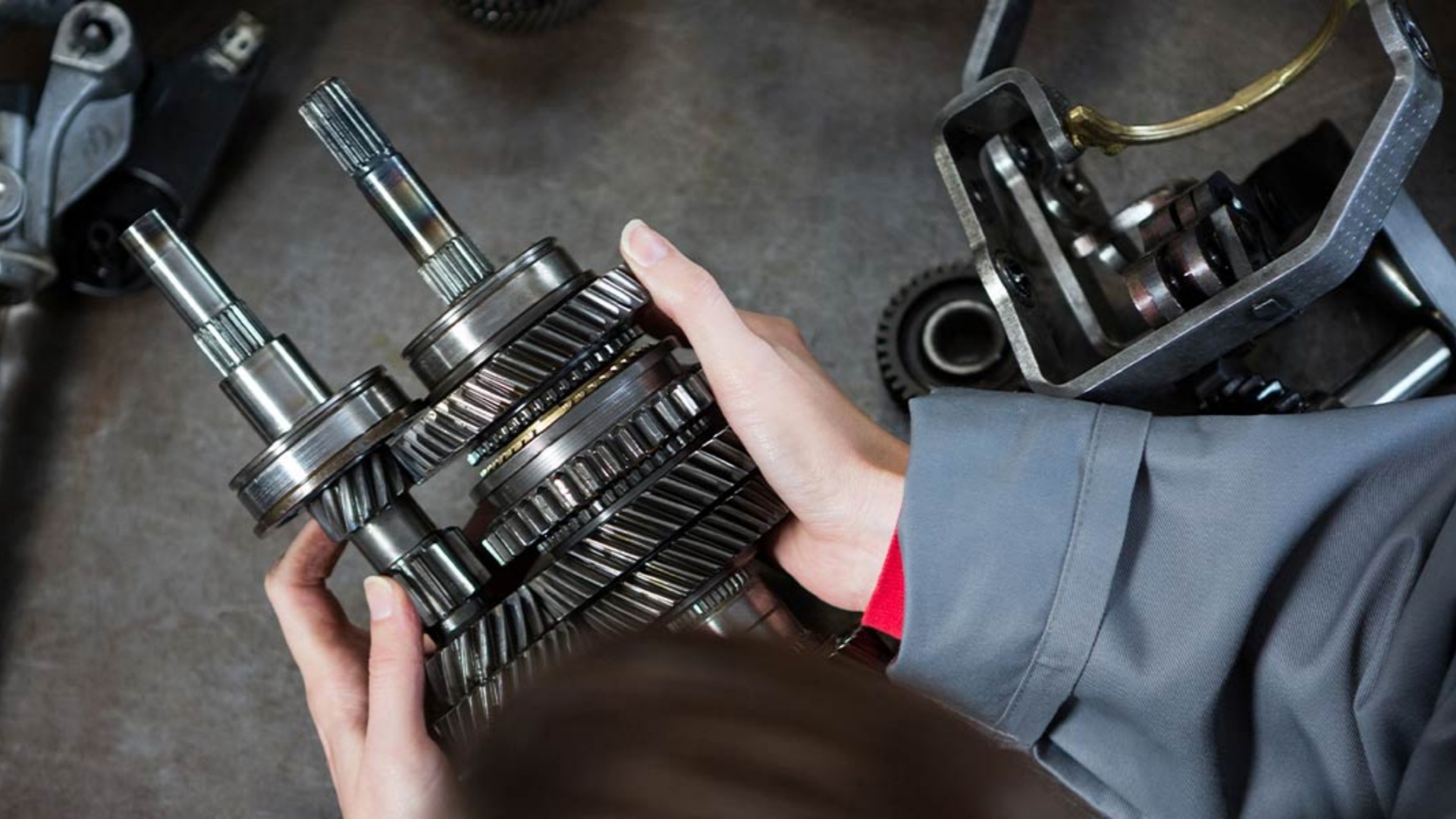
The choice between Hydrostatic (HST) and Torque Converter (Powershift) isn’t just about driver preference; it’s a calculation of parasitic loss, heat management, and duty cycles.
While Powershift transmissions have been the industry standard for decades due to their simplicity, HST technology has matured to dominate precision applications. This report analyzes the mechanical trade-offs to help you decide where to deploy your capital.
The Mechanics: What’s Actually Happening Under the Hood?
We need to move beyond basic definitions. Here is the mechanical reality of how these systems transfer torque.
Hydrostatic Transmission (HST): The “Closed-Loop” Approach
Think of HST as a high-pressure fluid circuit. There is no driveshaft physically connecting the engine to the axles. Instead, the engine drives a variable displacement piston pump. This pump pushes oil at massive pressures—mainstream construction machinery HST systems operate at 350-500 bar, with some heavy-duty equipment reaching up to 600 bar—to hydraulic motors mounted on the axles.
💡 The Engineer’s Take:It’s a direct energy conversion. By changing the angle of the pump’s swashplate, we change the flow rate. This means the engine can run at a constant, optimal RPM (sweet spot for torque) while the travel speed varies infinitely from 0 to max. It’s like a CVT, but hydraulic.
Torque Converter (Powershift): The “Fluid Coupling” Approach
This is classic mechanical engineering. The engine spins an impeller, which pushes fluid against a turbine—picture two fans facing each other, one blowing air to spin the other. This fluid coupling connects to a gearbox with fixed ratios (e.g., 4F/3R).
💡 The Engineer’s Take:The key weakness here is “Slip,” but this is limited to the low-speed, unlocked phase. Modern powershift transmissions are equipped with a lock-up clutch; once the vehicle speed reaches a threshold (typically 15-20 km/h), the clutch engages to mechanically connect the engine and transmission, eliminating slip and boosting efficiency to levels comparable to manual transmissions.
At low RPMs before lock-up, the coupling is inefficient; you lose energy to heat before the turbine catches up. You rely on friction clutch packs to change gears. It’s robust, yes, but it lacks the finesse of hydraulics.
Technical Performance Matrix
Don’t just look at the brochure specs. Here is how these specs translate to physical behavior on the job site.
| Critical Dimension | Hydrostatic (HST) Reality | Torque Converter (Powershift) Reality |
| Tractive Effort at Low Speed | Linear & Instant. Because the hydraulic system is pressurized, you get near-maximum torque at 1 km/h. No revving required. | Laggy. You need to spike the RPMs to “stall” the converter and generate breakout force (before lock-up engagement). |
| Deceleration (Dynamic Braking) | Built-in Retardation. Letting off the gas creates a hydraulic lock. You rarely touch the service brakes. | Coasting (before lock-up). The machine carries momentum. You rely entirely on friction brakes to stop 10 tons of steel; lock-up engagement improves deceleration stability at high speeds. |
| Inching (The “Creep” Factor) | Decoupled. Travel speed is independent of engine speed. You can lift fast while creeping slow. | Conflict. To lift fast, you need high RPM. To move slow, you need to “slip” the clutch. You are fighting the machine. |
| Parasitic Power Loss | Low to Moderate. Modern piston pumps are 90%+ efficient. | High at Low Speeds (unlocked phase). The torque converter generates significant waste heat during start-stop cycles; loss drops to minimal levels after lock-up. |
⚠️ Field Note:If your operators complain about “leg fatigue” from constantly riding the inching pedal/brake, you are likely using a Torque Converter machine in an application that screams for Hydrostatic.
Simulation Analysis: Where Metal Meets Mud
Let’s simulate two real-world stress tests. This is where the ROI is determined.
Scenario A: The “Gradeability” Test (30% Muddy Incline)
The Challenge: A loaded telehandler needs to stop mid-slope on a wet ramp and resume climbing.
- The Torque Converter Experience:
The operator has to perform a “three-footed dance”: left foot on the brake, right foot mashing the throttle to build converter pressure. Release the brake too early? You roll back. Release too late? You stall or spin the wheels because the torque delivery is abrupt. It relies heavily on operator skill to manage traction, especially in the unlocked low-speed phase. - The Hydrostatic Experience:
The operator simply lets off the pedal. The hydraulic motors lock, holding the machine stationary (like an automatic parking brake). To resume, they press the pedal. The swashplate angles slightly, sending just enough flow to turn the wheels without breaking traction. It’s not just easier; it saves your tires from shredding.
Scenario B: The “High-Cycle” Loading Operation
The Challenge: Unloading a truck. 50 cycles per hour. Short bursts of travel, high hydraulic boom demand.
- The Torque Converter Experience:
Every time the operator approaches the truck, they declutch (disconnect the transmission) to rev the engine for boom lift speed. This repetitive clutching/declutching generates massive heat in the transmission fluid. Over time, this leads to “Glazed Clutch Packs”—where friction discs become smooth and slip, requiring an expensive transmission rebuild. - The Hydrostatic Experience:
No clutches to burn. The travel function and lift function are hydraulically separated. The machine can perform rapid shuttle shifts (Forward/Reverse) without shock loads on the drivetrain.
Maintenance & Lifecycle Costs (The Unspoken Truth)
Salespeople talk about purchase price; Engineers talk about lifecycle costs.
The Hydrostatic Trade-off
- The Reality: HST systems have fewer mechanical wear parts and avoid clutch/brake maintenance, but they are not entirely maintenance-free. High-pressure circuits rely on seals (piston seals, shaft seals) that degrade over time and require periodic inspection/replacement; pilot control valves (electro-hydraulic proportional valves) may also experience sticking due to oil contamination. The tolerances in a piston pump are measured in microns.
- The Risk: If your field technicians are sloppy and introduce dust during a filter change, or if you use cheap hydraulic fluid, you will destroy the pump. A pump failure is expensive.
- Verdict: Requires disciplined maintenance (focused on oil cleanliness, seals, and control components), but rewards you with zero brake jobs and no transmission rebuilds.
The Torque Converter Trade-off
- The Reality: These are “dumb but tough” systems. They can tolerate dirtier oil and rougher abuse better than HST.
- The Risk: You will be replacing brake pads and discs frequently. In high-duty cycle applications, you will be servicing the transmission packs; lock-up clutches also require periodic inspection for wear.
- Verdict: Lower catastrophic risk, but higher steady-stream maintenance costs (brakes, fluids, clutch calibration, lock-up clutch service).
Engineer’s Recommendation
Stop asking “which is better” and start asking “what is my duty cycle?”
Buy Hydrostatic (HST) If:
Your daily log shows mixed operations. You are using equipment like forklifts, small loaders, or telehandlers for fork work, bucket work, and operations in confined construction sites where precision beats speed.
- The 15% fuel saving from efficient engine management will pay for the premium price in 2 years.
- Tip: Opt for HST with independent closed-loop cooling if occasional high-speed travel is required.
Buy Torque Converter If:
Your machine is a road runner. If you spend 50% of the day driving from Site A to Site B at 35km/h (e.g., long-distance traction equipment), or towing heavy generators, the fluid coupling (with lock-up function) is superior.
- Traditional non-closed cooling HST systems tend to overheat if driven at top speed for long durations.
- While high-end cooled HST can mitigate this, the cost premium may not be justified for high-speed-dominant tasks.
Q&A
We collected the most common technical questions from fleet managers and site foremen to settle the debate once and for all.
Q1: Can I use a Hydrostatic (HST) telehandler to tow heavy trailers on the road?
The Engineer’s Verdict: Generally, No.
The Technical Reason: While HST systems have immense starting torque, they are not designed for sustained high-load towing at speed. Doing so creates a massive pressure drop across the hydraulic motor, generating excess heat that the cooling system often cannot dissipate quickly enough.
- Recommendation: If your operation involves towing 10-ton generators or fuel bowsers over long distances (road travel), stick to a Torque Converter. It locks up mechanically and runs cooler at speed.
Q2: We operate in Canada/Russia (-25°C). Which system is safer for cold starts?
The Engineer’s Verdict: Both work, but HST requires stricter discipline.
The Technical Reason: At -25°C, standard hydraulic oil turns into molasses (high viscosity).
- HST Challenge: If an operator starts an HST machine and immediately revs it, the thick oil can cause pump cavitation (air bubbles imploding), which eats away the metal internals. You must use high-VI (Viscosity Index) fluid like ISO 32 or synthetic Arctic Hydraulic Oil and allow a 15-minute warm-up.
- Torque Converter: Slightly more forgiving because the fluid coupling allows for some “slip” while warming up, but you still risk blowing seals if you rush it.
Q3: Isn’t Hydrostatic maintenance way more expensive than a gearbox?
The Engineer’s Verdict: It depends on how you look at the ledger.
The Analysis:
- The “Parts” View: Yes. If a hydrostatic pump fails catastrophically (usually due to contamination), the replacement part is significantly more expensive than a clutch pack.
- The “Labor & Downtime” View: No. With an HST machine, you eliminate brake jobs. Since the hydraulic system does the braking, you aren’t changing brake pads every 500 hours. Over a 5-year lifecycle, the savings on brake maintenance often offset the higher potential risk of a pump repair.
Q4: My operators are used to “riding the clutch.” How hard is the switch to HST?
The Engineer’s Verdict: It requires a mindset shift (about 3 days of adaptation).
The Field Experience: Old-school operators used to Powershift transmissions have a habit of “left-foot braking” while revving the gas to keep the hydraulics fast. If they do this on an HST machine, the computer might get confused (some machines cut drive when the brake is touched).
- Training Tip: You need to train them to trust the pedal. Push to go, release to stop. Once they get used to the “single-pedal operation,” they rarely want to go back to shifting gears.