Bomba de Concreto
Nossa bomba de concreto oferece desempenho excepcional e versatilidade, tornando-a adequada para uma ampla gama de projetos residenciais, comerciais e industriais de construção.
Características de nossa bomba de concreto:
– Fluxo suave e contínuo de concreto
– Redução de tempo de inatividade e aumento da produtividade
– Resistência a condições de trabalho rigorosas
Confie em nós para fornecer a solução ideal às suas necessidades específicas, garantindo projetos de construção ágeis e bem-sucedidos, do início ao fim.
Obtenha um Orçamento Gratuito Agora!

Bomba de Concreto
Nossa bomba de concreto incorpora recursos avançados de segurança, priorizando o bem-estar dos trabalhadores e mitigando riscos potenciais. Escolher nossa bomba de concreto significa escolher eficiência, confiabilidade e segurança para seus projetos de construção.
Produção teórica máxima de concreto:
30–120 m³/h
Distância máxima teórica de transporte horizontal
120–500 m
Modelos de bomba de concreto mais vendidos
Em nossa empresa, temos orgulho de oferecer uma linha abrangente de bombas de concreto para atender às diversas exigências dos projetos. Oferecemos quatro tipos de bombas de concreto: bomba de reboque para concreto, bomba misturadora de concreto, bomba de braço para concreto e bomba de linha para concreto. Cada tipo cumpre uma finalidade específica e oferece vantagens únicas.
Ao investir em nossa bomba de concreto, você pode esperar operações eficientes, aumento da produtividade e colocação consistente de concreto de alta qualidade.
Confie em nós para fornecer a solução ideal às suas necessidades específicas, garantindo projetos de construção ágeis e bem-sucedidos, do início ao fim.

Modelos:
HBTSB30 – 100 (Diesel); HBTS30 – 100 (Elétrico)
Pressão Máx. de Bombeamento:
6 – 18 MPa
Potência do Motor Diesel:
45 – 129 kW
Bomba de concreto rebocável, também conhecida como bomba estacionária, que é acoplada a um grande equipamento, como um cavalo mecânico com semi-reboque, e não pode ser facilmente deslocada.
A principal vantagem de uma bomba de concreto estacionária é sua capacidade de bombear grandes volumes de concreto muito rapidamente. Seu design compacto e instalação fácil tornam-na uma escolha perfeita para canteiros de obras de pequeno a médio porte.
Modelos Recomendados:
Bomba de Concreto Rebocável a Diesel HBTS30 para Pequenos Projetos
Bomba de Concreto Rebocável a Diesel HBTSB80 para Grandes Projetos
Bomba de Concreto Rebocável a Diesel/Elétrica HBTS30

Produção Teórica Máx. de Concreto: 30 m³/h
Pressão Máx. de Bombeamento de Concreto: 10/7,6 h/l
Bomba de Concreto Rebocável a Diesel/Elétrica HBTS40

Produção teórica máxima de concreto: 40 m³/h
Potência do Motor Diesel: 10/7,6 h/l
Bomba de Concreto Rebocável a Diesel/Elétrica HBTS50

Produção teórica máxima de concreto: 50 m³/h
Potência do Motor Diesel: 13/7 h/l
Bomba de Concreto Rebocável a Diesel/Elétrica HBTS60

Produção Teórica Máx. de Concreto: 60 m³/h
Potência do Motor Diesel: 13/7 h/l
Bomba de reboque para concreto HBTS80 a diesel/elétrica

Produção teórica máxima de concreto: 80 m³/h
Potência do motor a diesel: 16/8,6 h/l
Bomba de reboque para concreto HBTS90 a diesel/elétrica

Produção teórica máxima de concreto: 90 m³/h
Potência do motor a diesel: 16/8,6 h/l
Bomba de reboque para concreto HBTS100 a diesel/elétrica

Produção teórica máxima de concreto: 100 m³/h
Potência do motor a diesel: 18/9,3 h/l

Modelos:
JBS30 ~ JBS50
Pressão Máx. de Bombeamento:
6 – 10 MPa
Potência do Motor Diesel:
52 – 92 kW
Alimentado principalmente a diesel, destaca-se por seu desempenho excepcional em áreas com eletricidade limitada ou instável.
A versão a diesel oferece vantagens únicas, como potência superior, maior mobilidade e confiabilidade operacional em áreas remotas, tornando-a uma solução economicamente viável que garante qualidade e reduz os custos com mão de obra.
Modelos Recomendados:
Bomba Misturadora de Concreto a Diesel JBS30 para Pequenos Projetos
Bomba Misturadora de Concreto a Diesel JBS50 para Grandes Projetos
Bomba Misturadora Elétrica de Concreto JBS30
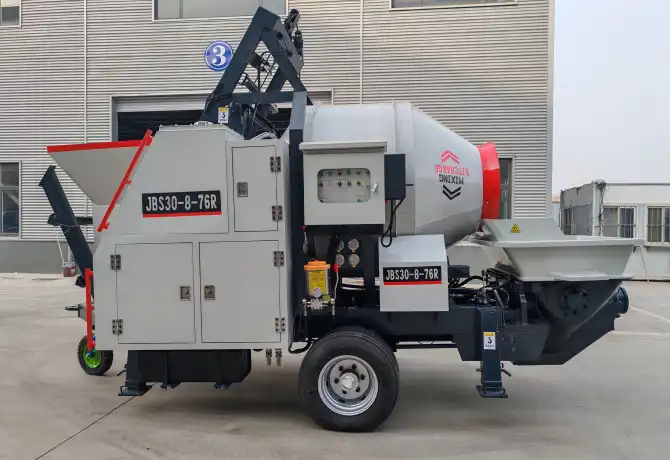
Produção Teórica Máx. de Concreto: 30 m³/h
Potência de Engenharia Elétrica: 37 kW
Bomba Misturadora Elétrica de Concreto JBS40

Produção teórica máxima de concreto: 40 m³/h
Potência de Engenharia Elétrica: 45 kW
Bomba Misturadora de Concreto a Diesel JBS30

Produção Teórica Máx. de Concreto: 30 m³/h
Potência do Motor Diesel: 52 kW
Misturador-bomba de concreto a diesel JBS40

Produção teórica máxima de concreto: 40 m³/h
Potência do motor a diesel: 82 kW
Misturador-bomba de concreto a diesel JBS50

Produção teórica máxima de concreto: 50 m³/h
Potência do motor a diesel: 92 kW

Modelos:
BTB40R-14
Pressão Máx. de Bombeamento:
10 MPa
Potência do Motor Diesel:
82 kW
É aí que entra em ação nossa bomba de braço para concreto. Ela oferece flexibilidade e eficiência sem paralelo, tornando-a adequada para projetos de construção em larga escala e áreas de difícil acesso.
Há diferentes braços de colocação de concreto para bombas de braço disponíveis para sua seleção, tais como: 14 m, 20 m, 30 m, 37 m, 44 m, 47 m, etc.
Modelos Recomendados:
Bomba de Braço para Concreto BTB40R-14 para Pequenos Projetos
Bomba de Braço para Concreto BTB40R-14

Produção Teórica Máx. de Concreto: 30 m³/h
Potência do Motor Diesel: 52 kW
Bomba de Braço para Concreto BTB40R-20

Produção teórica máxima de concreto: 50 m³/h
Potência do motor a diesel: 92 kW
Bomba de concreto com braço BTB40R-30

Produção teórica máxima de concreto: 40 m³/h
Potência do motor a diesel: 82 kW

Modelos:
HBT6006A-5; HBT6013C-5; HBT6016C-5; HBT8022C-5
Pressão Máx. de Bombeamento:
10 MPa
Potência do Motor Diesel:
82 kW
A bomba de concreto montada sobre caminhão, que cobre uma pequena área, facilita sua transferência para outro local de construção. Portanto, contribui para aliviar a carga de trabalho dos construtores e aumentar a eficiência produtiva.
Nossa bomba de linha de concreto foi projetada para a colocação precisa e controlada do concreto. Seu braço estreito e mangueiras flexíveis permitem o despejo exato em espaços confinados ou seções complexas de uma estrutura.
Modelos Recomendados:
Bomba de concreto montada sobre caminhão HBT6016C-5 para necessidades elevadas de produção de concreto
Bomba de concreto montada sobre caminhão elétrica/diesel HBT6006A-5

Produção Teórica Máx. de Concreto: 30 m³/h
Potência do motor diesel: 75/115 kW
Bomba de concreto montada sobre caminhão elétrica/diesel HBT6013C-5

Produção teórica máxima de concreto: 40 m³/h
Potência do motor diesel: 90/115 kW
Bomba de concreto montada sobre caminhão elétrica/diesel HBT6016C-5

Produção teórica máxima de concreto: 50 m³/h
Potência do motor diesel: 110/186 kW
Bomba de concreto montada sobre caminhão elétrica/diesel HBT8022C-5

Produção teórica máxima de concreto: 50 m³/h
Potência do motor diesel: 110/120 kW
Especificações da bomba de concreto
Especificações detalhadas da bomba sobre reboque para concreto a diesel
| Modelo | HBTSB40-10-82R | HBTSB60-13-129R | HBT80-16-129C | HBT90C-18-176R | |
| Produção teórica máxima de concreto (L/h) | m³/h | 40/26 | 67/45 | 84/50 | 95/55 |
| Pressão máxima de bombeamento de concreto (alta/baixa) | MPa | 10/7.6 | 7/13 | 16/8.6 | 18/9.3 |
| Tipo de válvula de distribuição | Válvula S | Válvula S | Válvula em S | Válvula em S | |
| Diâmetro × curso do cilindro de concreto | mm | Φ180×1200 | Φ200×1650 | Ф200×1800 | Ф200×1800 |
| Capacidade da tremonha × altura de alimentação | L/mm | 400/1100 | 800/1400 | 800×1400 | |
| Diâmetro da saída | mm | Φ150 | Φ180 | Ф180 | Ф180 |
| Modelo do motor diesel | Weifang Delier 6105ZB | Wechai | Weichai | Weichai | |
| Potência da engenharia elétrica | kW | 82 | 129 | 129 | 176 |
| Velocidade de rotação | r/min | 2100 | 2200 | 2200 | 2200 |
| Tipo de circuito | Circuito aberto | Circuito aberto | Circuito aberto | Circuito aberto | |
| Pressão do sistema de bombeamento | MPa | 32 | 32 | 32 | 32 |
| Pressão do sistema de mistura | MPa | 6-8 | 6-8 | 8 | 8 |
| Capacidade do tanque de óleo | L | 370 | 370 | 580 | 580 |
| Distância máxima teórica de bombeamento vertical/horizontal | m | 120/500 | 120/500 | 120/500 | 120/500 |
| Diâmetro máximo do agregado | mm | Brita/areia: 40/50 | Brita/areia: 40/50 | Brita/areia: 40/50 | Brita/areia: 40/50 |
| Diâmetro interno do tubo de descarga | mm | Φ125 | Φ125 | Ф125 | Ф125 |
| Dimensões: comprimento × largura × altura | mm | 5000 × 1850 × 1700 | 5800 × 2000 × 1750 | 6000 × 2200 × 2250 | 6000 × 2200 × 2250 |
Especificações detalhadas da bomba de concreto elétrica sobre reboque
| Item | HBTS30 | HBTS40 | HBTS50 | HBTS60 | HBTS80 |
| Vazão teórica máxima (m³/h) | 30 | 40 | 50 | 60 | 88 |
| Pressão máxima de bombeamento (MPa) | 10 | 10 | 10 | 13 | 16 |
| Distância vertical teórica máxima de transporte (m) | 140 | 200 | 120 | 280 | 300 |
| Distância horizontal teórica máxima de transporte (m) | 450 | 800 | 500 | 1000 | 1200 |
| Diâmetro máximo do agregado (mm) | 30 | 40 | 50 | 30 | 30 |
| Raio do tubo de transporte (mm) | 100 | 160 | 160 | 180 | 180 |
| Número de cilindros de transporte (peça) | 2 | 2 | 2 | 2 | 2 |
| Diâmetro interno × curso do pistão do cilindro de transporte (mm) | Φ140×1000 | Φ160×1000 | Φ200×1000 | Φ200×1600 | Φ200×1800 |
| Capacidade do reservatório de óleo hidráulico (L) | 250 | 400 | 500 | 600 | 800 |
| Capacidade do funil (m³) | 0.35 | 0.4 | 0.5 | 0.6 | 0.8 |
| Potência do motor elétrico principal (kW) | 45 | 45 | 55 | 90 | 110 |
Especificações detalhadas da Bomba-Misturadora de Concreto movida a diesel:
| Item | Tipo a diesel JBS30-10-52R | Tipo a diesel JBS40-10-82R | Tipo de diesel JBS50-10-92R | |
| Produção teórica máxima de concreto (L/h) | m³/h | 30 | 40 | 50 |
| Capacidade nominal de alimentação da betoneira | m³ | 0.56 | 0.56 | 0.56 |
| Capacidade nominal de descarga da betoneira | m³ | 0.45 | 0.45 | 0.45 |
| Pressão máxima de bombeamento de concreto (alta/baixa) | MPa | 6 | 10 | 10 |
| Tipo de válvula de distribuição | Válvula em S | Válvula em S | Válvula em S | |
| Diâmetro × curso do cilindro de concreto | mm | Φ180 × 500 | Φ180 × 800 | Φ180 × 1000 |
| Modelo do motor diesel | Yuchai/Weichai | Weichai Deutz WP4G110E220 | Yuchai 92 kW | |
| Potência do motor diesel | kW | 52 | 82 | 92 |
| Tipo de circuito | Circuito aberto | Circuito aberto | Circuito aberto | |
| Distância máxima teórica de bombeamento vertical/horizontal | m | 100/300 | 100/400 | 100/450 |
| Diâmetro máximo do agregado | mm | Brita/areia: 20–40 | Brita/areia: 40/50 | Brita/areia: 40/50 |
Especificações detalhadas da bomba de concreto com braço:
| Modelo | BTB40R-14 |
| Saída teórica máxima de concreto (m³/h) | 40 |
| Pressão máxima de bombeamento de concreto (MPa) | 10 |
| Tipo de válvula de distribuição | Válvula em S |
| Diâmetro × curso do cilindro de concreto (mm) | Ф180×1300 |
| Capacidade da tremonha (L) | 500 |
| Diâmetro da saída (mm) | Ф150 |
| Altura vertical da lança (m) | 15.4 |
| Raio de colocação do concreto (m) | 13–16 |
| Comprimento do braço principal (m) | 6.5 |
| Ângulo de elevação do braço principal (°) | 90 |
| Comprimento do braço secundário (m) | 6.5 |
| Ângulo de elevação do braço secundário (°) | 235 |
| Tubo de concreto (m) | 125*3 |
| Ângulo de rotação da torre (°) | 200 |
| Largura de abertura das pernas (m) | 5.5 |
| Controle da direção da barra de distribuição | Manualmente |
| Modelo do motor diesel () | Weichai WP4G110E220 |
| Potência do motor (kW) | 82 |
| Velocidade de rotação (RPM) | 2200 |
| Motor diesel de deslocamento | 32 CV |
| Pneus | 4*8.25*16 |
| Diâmetro máximo do agregado (mm) | 30 |
| Diâmetro interno do tubo de bombeamento (mm) | Ø100 |
| Dimensões: comprimento × largura × altura (mm) | 7500 × 2200 × 2920 |
Especificações detalhadas da bomba de concreto montada em caminhão movida a diesel:
| Item | Modelo | HBT6006A-5D | HBT6013C-5D | HBT6016C-5D | HBT8018C-5D | HBT12020C-5D |
| Dimensões (C×L×A) | mm | 6787*2099*2628 | 6695*2068*2068 | 6736*2125*2628 | 7161*2125*2628 | 7413*2125*2900 |
| Altura de alimentação | mm | 1415 | 1320 | 1420 | 1420 | 1420 |
| Peso bruto | kg | 6300 | 6100 | 6600 | 7300 | 9100 |
| Pressão máxima de bombeamento | MPa | 7 | 8/13 | 10/16 | 10/18 | 13/21 |
| Produção máxima | m³/h | 70 | 65/40 | 75/45 | 85/50 | 120/75 |
| Cilindro de bombeamento (diâmetro/course) | mm | 200/1400 | 200/1400 | 200/1800 | 200/1800 | 200/2100 |
| Potência do motor | kW | 115 | 115 | 186 | 186 | 273 |
| Capacidade do Funil | m³ | 0.6 | 0.7 | 0.7 | 0.7 | 0.7 |
Especificações detalhadas da bomba de concreto montada em caminhão com acionamento elétrico:
| Item | Modelo | HBT6006A-5 | HBT6013C-5 | HBT6016C-5 | HBT8022C-5 |
| Dimensões (C×L×A) | mm | 6587 *2099 *2232 | 6095*2100 *2232 | 6495*2100* 2232 | 7215*2125*2540 |
| Altura de alimentação | mm | 1415 | 1320 | 1320 | 1420 |
| Peso bruto | kg | 6100 | 6130 | 6600 | 10520 |
| Pressão máxima de bombeamento | MPa | 7 | 8/13 | 10/16 | 14/22 |
| Produção máxima | m³/h | 70 | 65/40 | 70/45 | 85/50 |
| Cilindro de bombeamento (diâmetro/course) | mm | 200/1400 | 200/1400 | 200/1800 | 200/2100 |
| Potência do motor | kW | 75 | 90 | 110 | 2*110 |
| Capacidade do Funil | m³ | 0.6 | 0.7 | 0.7 | 0.7 |
Por que investir em bombas de concreto?
Investir em bombas de concreto pode ser vantajoso por diversos motivos. Abaixo estão algumas das principais vantagens:
- IMaior eficiência: As bombas de concreto permitem a colocação precisa e eficiente do concreto. Elas conseguem bombear o concreto a uma taxa mais elevada e com maior precisão, tornando o processo mais rápido e reduzindo os requisitos de mão de obra. Isso pode resultar em economias significativas de tempo e custo em projetos de construção.
- Versatilidade: As bombas de concreto estão disponíveis em diversos tamanhos e configurações, permitindo sua utilização em uma ampla gama de projetos de construção, desde pequenos trabalhos residenciais até grandes projetos comerciais e de infraestrutura. Elas podem ser facilmente transportadas e instaladas em diferentes locais, tornando-as adequadas para diversos tipos de canteiros de obras e aplicações.
- Melhoria da qualidade: As bombas de concreto ajudam a garantir uma colocação consistente e uniforme do concreto, reduzindo a probabilidade de segregação e outros problemas de qualidade. A entrega controlada e precisa do concreto também minimiza as chances de superenchimento ou subenchimento, resultando em um produto final de maior qualidade.
- Segurança e redução da mão de obra: O uso de bombas de concreto elimina a necessidade de despejo manual, reduzindo o esforço físico dos trabalhadores e minimizando o risco de lesões. Além disso, permite um melhor acesso a áreas de difícil alcance, como edifícios altos ou obras subterrâneas, reduzindo a necessidade de andaimes ou outros equipamentos de acesso.
- Economia de custos: Embora as bombas de concreto representem um investimento inicial significativo, a maior eficiência e produtividade que oferecem podem gerar economias de custo a longo prazo. Cronogramas de construção mais rápidos, redução dos requisitos de mão de obra e melhor controle de qualidade podem resultar em custos totais do projeto mais baixos.
No geral, investir em bombas de concreto pode ajudar a aumentar a produtividade da construção, melhorar a qualidade, reforçar a segurança e, por fim, contribuir para o sucesso dos projetos de construção.

. Características
As Vantagens da Nossa Bomba de Concreto
O modelo pequeno é leve e fácil de movimentar, adequado para pequenos projetos de construção;
O sistema hidráulico completo pode prolongar a vida útil dos componentes, melhorar a confiabilidade do equipamento, reduzir a taxa de falhas e diminuir os custos de manutenção;
A válvula em forma de S é fundida em aço manganês austenítico e possui as duas vantagens simultâneas de resistência à alta pressão e ao desgaste;
Os principais componentes elétricos são provenientes das empresas Schneider e LG, sendo altamente aprovada a confiabilidade do sistema de controle elétrico;
As placas em forma de óculos e os anéis de corte são fabricados em liga metálica anti-desgaste de alta dureza, apresentando longa vida útil;
Considerações sobre o Custo da Bomba de Concreto
Ao avaliar o custo de aquisição de uma bomba de concreto, é essencial ir além do investimento inicial e considerar o impacto financeiro a longo prazo. Embora seja verdade que as bombas de concreto representem um custo significativo no início, elas oferecem benefícios substanciais capazes de superar essa despesa inicial.
Em primeiro lugar, a maior produtividade e eficiência proporcionadas por uma bomba de concreto podem resultar em economias consideráveis de tempo e mão de obra. A melhoria na precisão da colocação do concreto reduz a necessidade de retrabalho, levando a menor desperdício de materiais e a um produto final de maior qualidade. Esses fatores contribuem para economias gerais nos projetos de construção.
Além disso, devem ser levados em conta os custos com manutenção e reparos. É fundamental escolher um fabricante conceituado, com uma rede de assistência técnica confiável e peças de reposição facilmente disponíveis. A manutenção preventiva regular pode ajudar a prolongar a vida útil da bomba e evitar paradas dispendiosas. Considerar esses fatores auxilia na avaliação do custo real de propriedade e operação de uma bomba de concreto ao longo de sua vida útil.
Ademais, deve-se levar em conta o valor de revenda de uma bomba de concreto bem conservada. Normalmente, bombas de alta qualidade mantêm seu valor e podem ser facilmente vendidas no mercado de equipamentos usados, proporcionando um possível retorno sobre o investimento ao atualizar ou substituir a bomba.
No geral, embora o custo inicial de uma bomba de concreto seja uma consideração significativa, é importante avaliar os benefícios a longo prazo, incluindo maior eficiência, economia de tempo, redução dos custos com mão de obra e potencial valor de revenda. Ao analisar o custo total de propriedade, os compradores podem tomar uma decisão informada, alinhada ao seu orçamento e às necessidades do projeto.
Comprar Nova, Usada ou Alugar uma Bomba de Concreto?
Decidir se se deve comprar nova, usada ou alugar uma bomba de concreto depende de diversos fatores, como requisitos do projeto, orçamento e uso a longo prazo. Abaixo seguem algumas considerações para cada opção:
1. Por que comprar uma nova bomba de concreto:
- Adequado para empresas com necessidades frequentes de bombeamento de concreto ou projetos de longo prazo.
- Oferece a vantagem de possuir o equipamento integralmente e ter controle total sobre seu uso.
- Proporciona a oportunidade de personalizar a bomba conforme requisitos específicos.
- Geralmente acompanha garantia e suporte pós-venda.
- Exige um investimento inicial significativo, incluindo os custos de manutenção, operação e armazenamento.
2. Por que comprar uma bomba de concreto usada:
- Pode ser uma opção economicamente vantajosa, especialmente para pequenas empresas ou projetos com orçamento limitado.
- Permite a propriedade de uma bomba de concreto a um custo inicial menor do que a compra de uma nova.
- Exige inspeção cuidadosa para garantir o estado e a funcionalidade do equipamento usado.
- Pode exigir custos adicionais de manutenção e reparo.
- A disponibilidade de bombas usadas pode variar, e encontrar o equipamento adequado pode levar tempo.
3. Por que alugar uma bomba de concreto:
- Mais adequado para projetos de curto prazo ou necessidades ocasionais de bombeamento de concreto.
- Exige um investimento inicial mínimo, pois as empresas de locação se responsabilizam pela manutenção e pelo armazenamento.
- Fornece acesso a uma variedade de bombas de concreto com diferentes capacidades e especificações.
- Os custos de locação podem ser mais elevados a longo prazo, caso a necessidade de bombeamento de concreto persista.
- A locação pode apresentar limitações quanto à disponibilidade e ao agendamento, especialmente durante os períodos de pico na construção civil.
Ao tomar uma decisão, é essencial avaliar os requisitos específicos do seu projeto, analisar o orçamento e considerar a utilização a longo prazo do equipamento. Consultar profissionais da área ou fornecedores de equipamentos também pode oferecer informações valiosas e ajudá-lo a tomar uma decisão informada.
Preço da Bomba de Concreto
| Capacidade de Descarga (m³) | Preço Aproximado |
| Bomba de Concreto sobre Reboque | $10.000,00 – $100.000,00 |
| Betoneira com Bomba de Concreto | $15.000,00 – $25.000,00 |
| Bomba de Concreto Montada em Caminhão | $16.500,00 – $43.000,00 |
| Bomba de Concreto com Braço Articulado | $10.000,00 – $500.000,00 |
Nossas bombas misturadoras de concreto têm preços competitivos, com uma faixa fornecida apenas como referência. No entanto, o custo final pode ser influenciado por diversos fatores, incluindo o modelo, a capacidade, as características tecnológicas e quaisquer especificações adicionais que você possa exigir.
O preço também pode variar conforme os serviços de personalização escolhidos, pois nos esforçamos para atender às necessidades específicas do seu projeto e às suas restrições orçamentárias. Oferecemos um serviço sob medida, permitindo-lhe adaptar sua bomba misturadora de concreto exatamente às suas exigências.
Lembre-se de que investir em nossos equipamentos não se trata apenas do custo inicial, mas sim do valor, da eficiência e das economias de longo prazo que eles proporcionam.
Casos Globais
Bomba Misturadora Elétrica de Concreto JBS40 na Guiana

Bomba de Reboque para Concreto HBTSB60 no Quênia

Bomba de Reboque para Concreto HBTS40 no Canadá

Bomba de Reboque para Concreto LHBT 80 na Zâmbia

Fatores a Considerar ao Comprar uma Bomba de Concreto
Abaixo estão outros fatores a considerar ao comprar uma bomba de concreto:
Requisitos do Projeto: Avalie as necessidades específicas dos seus projetos, incluindo o tipo de concreto utilizado, a distância e a altura de aplicação do concreto, bem como o volume de saída esperado. Certifique-se de que a bomba de concreto escolhida consiga atender eficazmente a esses requisitos.
Tipo de bomba: Existem diferentes tipos de bombas de concreto disponíveis, como bombas com braço articulado (boom pumps), bombas de tubulação (line pumps) e bombas especializadas para aplicações específicas. Avalie qual tipo melhor atende às exigências do seu projeto em termos de alcance, manobrabilidade e versatilidade.
Tamanho e capacidade da bomba: Considere o tamanho e a capacidade da bomba de concreto para garantir que ela consiga lidar com o volume e a vazão exigidos pelos seus projetos. Fatores como comprimento do braço articulado, vazão da bomba e capacidade da tremonha devem ser levados em conta.
Manutenção e assistência técnica: Avalie a disponibilidade de peças de reposição e de suporte técnico para a bomba de concreto que pretende adquirir. Serviços de manutenção confiáveis e acessíveis são fundamentais para reduzir o tempo de inatividade e assegurar o desempenho duradouro do equipamento.
Nível de habilidade do operador: Considere a experiência e o nível de especialização dos seus operadores. Algumas bombas de concreto possuem controles e funcionalidades mais complexas, exigindo maior habilidade e treinamento. Escolha uma bomba adequada às capacidades da sua equipe ou considere os custos adicionais com treinamento dos operadores.
Reputação do fabricante: Pesquise e escolha um fabricante conceituado, reconhecido por produzir bombas de concreto de alta qualidade e confiáveis. Considere seu histórico, avaliações de clientes e serviços de suporte ao cliente.
Safety Features: Certifique-se de que a bomba de concreto possua recursos de segurança adequados, como sistemas de estabilidade do braço articulado, botões de parada de emergência, opções de controle remoto e alarmes de segurança. A segurança deve ser prioridade máxima para proteger os trabalhadores e prevenir acidentes.
Análise de custos: Avalie o custo inicial de aquisição, incluindo quaisquer recursos opcionais adicionais necessários, bem como os possíveis custos a longo prazo, tais como manutenção, reparos e consumíveis (por exemplo, peças de desgaste, lubrificantes). Compare diferentes opções para determinar a alternativa mais econômica dentro do seu orçamento.
Considerações ambientais: Procure bombas de concreto projetadas para serem ecologicamente corretas, com características como menor consumo de combustível, níveis reduzidos de ruído e emissões. Escolher uma opção ambientalmente responsável está alinhada às práticas sustentáveis e ecológicas na construção civil.
Valor de revenda: Embora não seja uma preocupação imediata, vale a pena considerar o potencial valor de revenda futura da bomba de concreto, caso você planeje atualizá-la ou vendê-la no futuro. Determinadas marcas ou modelos podem ter um valor de revenda mais elevado, o que pode influenciar seu investimento de longo prazo.
Lembre-se de consultar profissionais do setor, fornecedores de equipamentos ou operadores experientes para obter maiores insights e orientações detalhadas ao tomar sua decisão de compra.
Princípios de Funcionamento da Bomba de Concreto

O princípio de funcionamento de uma bomba de concreto envolve diversos componentes e processos essenciais. A seguir, apresenta-se uma explicação simplificada de como opera uma bomba de concreto:
- Funil de Concreto: A bomba de concreto começa com um funil que armazena a mistura líquida de concreto. Esse funil está conectado a um sistema de alimentação ou esteira transportadora que fornece continuamente concreto à bomba.
- Válvula em S ou Válvula de Rocha: No interior da bomba de concreto, há um mecanismo de válvula em S ou válvula de rocha. Essa válvula, normalmente fabricada em aço, é responsável por controlar o fluxo de concreto. Ela consiste em duas abas com formato côncavo que alternam entre abertura e fechamento. Quando uma aba se abre, a outra se fecha, criando uma vedação que impede o refluxo do concreto.
- Pistões e Cilindros: A bomba de concreto também contém cilindros hidráulicos e pistões alternativos. Esses componentes trabalham em conjunto para gerar a pressão necessária para empurrar o concreto através do sistema. À medida que os pistões recuam, forma-se um vácuo, e o concreto é aspirado para dentro do cilindro da bomba.
- Sistema de Bombeamento de Concreto: Assim que os pistões avançam, o concreto é expelido do cilindro e direcionado para o sistema de descarga. A válvula em S regula o fluxo do concreto através do tubo ou mangueira de descarga.
- Tubo ou Mangueira de Descarga: O concreto é transportado por um tubo ou mangueira de descarga até o local desejado. O comprimento do tubo ou da mangueira determina a distância máxima a que o concreto pode ser bombeado, podendo ser estendido ou retratado conforme necessário.
- Extensão da Lança (se aplicável): Se a bomba de concreto possuir uma lança, ela pode se estender e articular-se para alcançar áreas de difícil acesso. A lança é controlada hidraulicamente, permitindo a colocação precisa do concreto em diversas alturas e distâncias.
- Operação Contínua: A bomba de concreto opera em um ciclo contínuo. Desde que haja um fluxo constante de concreto da tremonha, a bomba pode continuamente aspirá-lo e impulsioná-lo através do sistema de entrega.
É importante observar que existem diferentes tipos de bombas de concreto, incluindo bombas montadas em caminhão, bombas montadas em reboque e bombas estacionárias, cada uma com variações próprias em projeto e operação. No entanto, os princípios básicos permanecem os mesmos, envolvendo a transferência de concreto de uma tremonha, por meio de um mecanismo de válvula, até um sistema de entrega para colocação no canteiro de obras.
Aplicações das Bombas de Concreto
As bombas de concreto são equipamentos de construção versáteis, amplamente utilizados em diversas aplicações. Abaixo estão algumas aplicações comuns nas quais as bombas de concreto são empregadas:
Construção de Edifícios Altos: As bombas de concreto são extensivamente utilizadas em projetos de construção de edifícios altos. Graças à sua capacidade de alcançar grandes alturas e longas distâncias horizontais, essas bombas garantem a colocação eficiente e oportuna do concreto em edifícios elevados. Oferecem precisão e velocidade ao entregar o concreto em diferentes andares, sem as limitações dos métodos tradicionais, como guindastes e caçambas.
Projetos de Infraestrutura em Grande Escala: As bombas de concreto são fundamentais na construção de projetos de infraestrutura em grande escala, tais como pontes, túneis, barragens e rodovias. Esses projetos frequentemente exigem uma grande quantidade de concreto a ser colocada rapidamente e com precisão. As bombas de concreto conseguem transportar facilmente o concreto por longas distâncias e alcançar locais desafiadores, permitindo uma colocação eficiente do concreto em estruturas complexas.
Construção residencial: As bombas de concreto também são utilizadas em projetos de construção residencial, especialmente na execução de fundações, calçadas ou pisos de subsolo. Com uma bomba de concreto, os empreiteiros podem garantir uma colocação uniforme e contínua do concreto, o que contribui para aumentar a resistência e a durabilidade das estruturas. A maior eficiência proporcionada pela bombagem de concreto reduz ainda os requisitos de mão de obra e melhora os prazos de construção.
Locais Remotos: Em projetos onde o acesso e a logística possam ser desafiadores — como canteiros de obras remotos ou locais com acesso rodoviário limitado — as bombas de concreto constituem uma ferramenta inestimável. Podem ser montadas em reboques ou caminhões e transportadas até o local, possibilitando a entrega de concreto em áreas onde os métodos tradicionais podem ser impraticáveis ou impossíveis.
Pavimentação por Deslizamento (Slipform): As bombas de concreto desempenham um papel fundamental na pavimentação por deslizamento (slipform), método comumente empregado na construção de rodovias e em grandes projetos de pavimentação de concreto. A bomba fornece concreto à máquina de pavimentação por deslizamento, assegurando um fluxo contínuo e uniforme. Isso permite a conformação e o nivelamento precisos do concreto, resultando em superfícies rodoviárias lisas e duráveis.
Pisos Industriais: Em ambientes industriais e comerciais, onde são necessárias grandes superfícies de piso planas e duráveis, as bombas de concreto são utilizadas para alcançar uma colocação ideal do concreto. Seja em armazéns, fábricas ou espaços comerciais, a alta eficiência das bombas de concreto contribui para a entrega e colocação rápidas e precisas do concreto, garantindo uma base robusta para pisos industriais.
Estes são apenas alguns exemplos das muitas aplicações nas quais as bombas de concreto são empregadas. Sua versatilidade, eficiência e capacidade de acessar locais desafiadores tornam-nas uma ferramenta essencial em projetos de construção modernos, otimizando operações e melhorando os resultados gerais dos projetos.
Tendências de Mercado e Perspectivas Futuras
As tendências de mercado desempenham um papel crucial no setor de bombas de concreto, sendo fundamental que os compradores permaneçam informados sobre os mais recentes desenvolvimentos. Uma tendência notável é a crescente adoção de tecnologias avançadas nas bombas de concreto.
Recursos de automação, como operação por controle remoto e monitoramento de dados, estão se tornando cada vez mais comuns, aumentando a eficiência e reduzindo a fadiga do operador. Espera-se que essa tendência continue à medida que os fabricantes investirem em pesquisa e desenvolvimento para melhorar o desempenho e as capacidades de suas bombas.
Outra tendência significativa é o foco em soluções ecologicamente corretas. O setor da construção civil, de forma geral, está adotando práticas sustentáveis, e o segmento de bombas de concreto não é exceção. Os fabricantes estão desenvolvendo bombas mais eficientes energeticamente, que reduzem emissões e atendem às normas ambientais cada vez mais rigorosas. Essas bombas não só reduzem a pegada de carbono, mas também proporcionam economia de custos a longo prazo, ao diminuírem o consumo de combustível.
Além disso, o uso de telemática e análise de dados em tempo real está em ascensão. As bombas de concreto avançadas agora vêm equipadas com sensores que monitoram o desempenho da bomba, o fluxo de concreto e outros parâmetros críticos. Esses dados em tempo real permitem que operadores e gerentes de projeto tomem decisões embasadas, otimizem a utilização das bombas e garantam manutenções oportunas, melhorando assim a eficiência geral do projeto.
Outros equipamentos que você pode precisar
Capacidade: 40–320 t/h
Capacidade: 25–240 m³/h
Potência nominal: 36,8–110 kW
Empilhadeira para Terrenos Irregulares
Capacidade: 3–10 toneladas
Capacidade: 1,2–6,5 m³
. Certificações
Nossas Certificações



 English
  Spanish
  French
  Russian
  Arabic
  Portuguese
  Italian
  Turkish
  Georgian
  Indonesian