Retroescavadeira
Retroescavadeira – compact design and excellent maneuverability make it suitable for working in tight spaces and confined job sites.
Outstanding Features of our backhoe loader:
> Precise controls and powerful digging capabilities
> Versatile attachment options
> Easily navigate around obstacles
Your team can experience improved efficiency, faster completion of projects, and reduced manual labor requirements.
Obtenha um Orçamento Gratuito Agora!
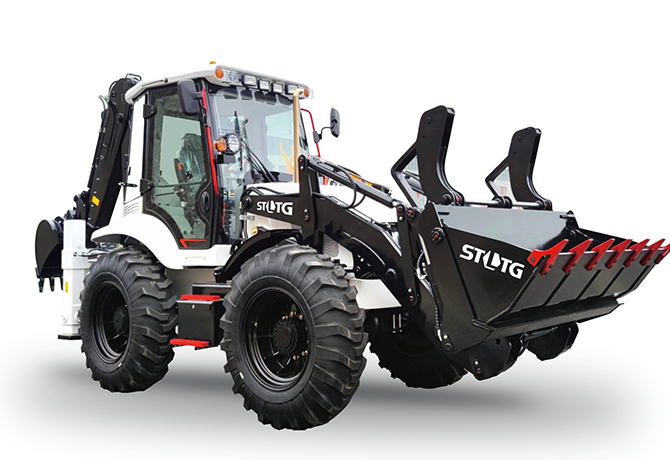
Retroescavadeira
The backhoe loader is a type of small, multifunctional construction machinery that is often used for small projects after completing larger ones. It can be equipped with various working devices and accessories to perform tasks such as digging, loading, road surface crushing, leveling, trenching, and pipeline laying.
Bucket Capacity:
0.8 – 1.2m³
Backhoe Capacity:
0.2 – 0.3m³
What Is A Backhoe Loader?
A backhoe loader is a type of construction equipment that combines the functions of a wheel loader and a backhoe. It is commonly used in construction projects, landscaping, and excavation work. The backhoe loader is designed to provide versatility and efficiency in various tasks, such as digging, trenching, loading, and material handling.
The main components of a backhoe loader are the backhoe, which is mounted on the rear of the machine and consists of a digging bucket attached to a hydraulic arm, and the loader, which is located on the front and consists of a bucket for scooping and lifting materials. The machine’s design allows it to perform both digging and loading operations, making it a popular choice in the construction industry.
The backhoe loader is often used in urban areas or confined spaces where larger machines may not be suitable. Its compact size and maneuverability make it versatile and effective in a wide range of applications. Additionally, the machine’s hydraulic system provides powerful digging and lifting capabilities, allowing operators to complete tasks efficiently.
Overall, the backhoe loader is a versatile and essential machine in the construction industry, offering the combined functions of a wheel loader and a backhoe for various construction and excavation tasks.
Why Is It Called A Backhoe Loader
The term “backhoe loader” comes from the combination of two key components: the “backhoe” and the “loader.”
- Backhoe: The backhoe refers to the digging component attached to the rear of the machine. It consists of a bucket attached to a hydraulic arm that enables excavation, digging, and trenching operations. The bucket is typically curved and shaped like a hoe, which is where the term “backhoe” originates from.
- Loader: The loader refers to the front-end attachment of the machine that is used for loading, lifting, and moving materials. It consists of a bucket or a scoop-like attachment that can lift and transport soil, rocks, debris, or other materials. The term “loader” is derived from its primary function in handling and loading materials.
- It is also called tractor with front loader and backhoe,excavator loader,digger loader,wheel backhoe loader.
Combining these two components, the machine was named a “backhoe loader” to highlight its dual functionality. It can dig and excavate using the backhoe attachment on the rear and load or move materials using the front loader attachment. The name accurately describes the primary functions and capabilities of this construction equipment.
Hot Selling Backhoe Loader Models
SinoTech Luton’s backhoe loaders enables you to handle a wide range of tasks with a single machine, enhancing productivity and cost-effectiveness in your operations.
Here are hot selling models:
– 388 Backhoe Loader (High-end )
– 388II Backhoe Loader (High-end )
– 388T Backhoe Loader (High-end )
– 388H Backhoe Loader (Large Type)
– WZ30-25 Backhoe Loader
Choosing the appropriate model and capacity of backhoe loader is crucial to meet project-specific requirements, optimize costs, improve production efficiency, enhance flexibility, and facilitate long-term planning. By aligning the plant with the project’s specific needs, it helps prevent overinvestment or bottlenecks, ensuring cost optimization and on-time completion.
Here are our all models available:

STLTG Backhoe Loader
Modelos:
388/388II/388T/388H/WZ30-25
Loader Bucket Capacity:
0.8 – 1.2m³
Excavator Bucket Capacity:
0.2 – 0.3m³
Our backhoe loaders have a unique structure with a loading device at the front and an excavating device at the rear. During construction, the operator only needs to rotate the seat to switch from the loader to the excavator.
The intuitive controls and ergonomic design allow operators to work efficiently and complete tasks with precision.
Modelos Recomendados:
388 High-end Backhoe Loader For Short Project Period
388H Backhoe Loader For Tight Worksite
378 Backhoe Loader

Loader Bucket Capacity: 1m³
Excavator Bucket Capacity: 0.3m³
388 Backhoe Loader (High-end)

Loader Bucket Capacity: 1m³
Excavator Bucket Capacity: 0.3m³
388II Backhoe Loader (High-end)

Loader Bucket Capacity: 1m³
Excavator Bucket Capacity: 0.3m³
388H Backhoe Loader

Loader Bucket Capacity: 1.2m³
Excavator Bucket Capacity: 0.3m³
388T Backhoe Loader

Loader Bucket Capacity: 1.2m³
Excavator Bucket Capacity: 0.3m³
WZ30-25 Backhoe Loader

Loader Bucket Capacity: 1m³
Excavator Bucket Capacity: 0.3m³
WZ30-25 Backhoe Loader

Loader Bucket Capacity: 1m³
Excavator Bucket Capacity: 0.3m³
Backhoe Loader Specifications
Detailed Specifications of STLTG 388/388IIBackhoe Loader:
| The Main Performance Parameter of Backhoe Loader STLTG 388/388II | |||
| Overall Operating Weight | 7860KG | Final Reducer | Single Stage Final Reducer |
| Transport Dimension | Rated Loader of Axle | 22.5t 18.5t | |
| mm L*W*H | 6050×2465×3752 | Transmission System | |
| Distância entre eixos | 2280mm | Torque Converter | |
| Min. Ground Clearance | 300mm | Modelo | YJ290 |
| Bucket Capacity | 1.0m3 | Tipo | Single-stage Three Elements |
| Breakout Force | 47KN | Max. Efficiency | 84.4% |
| Loading Lifting Capacity | 2500KG | Inlet Pressure | 0.4Mpa–0.65Mpa |
| Bucket Dumping Height | 2650mm | Outlet Pressure | 1.5Mpa—1.8 Mpa |
| Bucket Dumping Distance | 1025mm | Cooling Method | Oil-cooling Pressure Circulation |
| Digging Depth | 52mm | Gearbox | |
| Backhoe Capacity | 0.3 m3 | Tipo | Transmissão de Potência por Eixo Fixo |
| Profundidade Máxima de Escavação | 4085 mm | Pressão do Óleo no Acoplamento | 1373 kPa — 1569 kPa |
| Ângulo de Giro da Garra de Escavadeira | 180o | Marchas | Duas Marchas à Frente, Duas Marchas à Ré |
| Força de Tração Máxima | 60 kN | Velocidade Máxima | 24 km/h |
| Motor | Pneus | ||
| Modelo | Yuchai YC4A105Z-T20 | Modelo | 14-17,5/19,5L-24 |
| Tipo | Turbocompressão de Quatro Tempos | Pressão da roda dianteira | 0,4 MPa |
| Diâmetro interno do cilindro × curso | 4-108 × 132 | Pressão da roda traseira | 0,35 MPa |
| Potência nominal | 75 kW | Sistema de freio | |
| Velocidade nominal | 2200 r/min | Freio de serviço | Freio a disco com acionamento pneumático sobre óleo |
| Consumo mínimo de combustível | 230 g/km·h | Tipo Externo | |
| Torque Máximo | 400 N·m | Autorregulação | |
| Deslocamento | 4,837 L | Autoequilíbrio | |
| Sistema de Direção | Freio de Emergência | Potência de Operação para Aplicação do Freio | |
| Modelo do Dispositivo de Direção | BZZ5-250 | Potência de Operação Manual para Acionamento do Freio | |
| Ângulo de Direção | ±36 o | Sistema hidráulico | |
| Raio mínimo de giro | 6581 mm | Potência de escavação da garra de escavadeira | 50 kN |
| Pressão do sistema | 12 MPa | Potência de escavação da caçamba | 31 kN |
| Eixo | Tempo de elevação da caçamba | 6,8 s | |
| Fabricante | Fábrica de Eixos Feicheng | Tempo de descida da caçamba | 3,1 S |
| Tipo Principal de Transmissão | Redução Dupla | Tempo de Descarga da Concha | 2,0 S |
| Os parâmetros estão sujeitos a alterações sem aviso prévio | |||
Especificações Detalhadas da Escavadora de Traseira STLTG 388H:
| Parâmetro Principal de Desempenho da Escavadora de Traseira STLTG 388T | |||
| Overall Operating Weight | 10 500 kg | Carga Dinâmica/Estatística Nominal do Eixo Dianteiro | 13 t |
| Desempenho | Transmission System | ||
| C*L*A (mm) | 6 420 × 2 530 × 3 120 | Torque Converter | |
| Distância entre eixos | 3 120 mm | Modelo | YJ320 |
| Min. Ground Clearance | 300mm | Tipo | Single-stage Three Elements |
| Bucket Capacity | 1.2m3 | Max. Efficiency | 84.4% |
| Breakout Force | 47KN | Inlet Pressure | 0.4—0.65Mpa |
| Loading Lifting Capacity | 2500KG | Outlet Pressure | 1.6Mpa—1.9Mpa |
| Bucket Dumping Height | 3050mm | Cooling Method | Oil-cooling Pressure Circulation |
| Bucket Dumping Distance | 870mm | Gearbox | |
| Digging Depth | 52mm | Tipo | Mechanical manipulative hydrodynamic synchronous shifting |
| Backhoe Capacity | 0.3 m3 | Pressão do Óleo no Acoplamento | 1373 kPa — 1569 kPa |
| Profundidade Máxima de Escavação | 3820mm | Marchas | four Gears Ahead, four Gears Astern |
| Ângulo de Giro da Garra de Escavadeira | 180o | Max. speed | 36Km/h |
| Força de Tração Máxima | 50 kN | Pneus | |
| Motor | Modelo | 16.9—28T | |
| Modelo | YUCHAI YC4A105Z-T20 | Pressão da roda dianteira | 0,35 MPa |
| Tipo | In Line Direct injection Four-Stroke and Injection Combustion Chamber | Pressão da roda traseira | 0.35 Mpa |
| Diâmetro interno do cilindro × curso | 4-108 × 132 | Sistema de freio | |
| Potência nominal | 75 W | Freio de serviço | Tipo úmido |
| Velocidade nominal | 2200 r/min | Tipo interno | |
| Consumo mínimo de combustível | 230 g/km·h | Autorregulação | |
| Torque Máximo | 400 N·m / 1400–1600 rpm | Autoequilíbrio | |
| Deslocamento | 4,8 L | Freio de Emergência | Freio manual |
| Sistema de Direção | Freio de finalização por meio hidráulico | ||
| Modelo do Dispositivo de Direção | BZZ5-250 | Sistema hidráulico | |
| Ângulo de Direção | ±35 o | Descarga da bomba de trabalho | 63 ml/r |
| Raio mínimo de giro | 6950 mm | Working pump pressure | 20Mpa |
| Pressão do sistema | 14Mpa | Type of steering gear | BZZ5-250 |
| Eixo | Hydraulic tank | 130L | |
| Fabricante | FeiCheng Axle Factory | Diesel tank capacity | 130L |
| Modelo | WZL100DF | ||
Detailed Specifications of 388T Backhoe Loader:
| Parâmetro Principal de Desempenho da Escavadora de Traseira STLTG 388T | |||
| Overall Operating Weight | 8200KG | Carga Dinâmica/Estatística Nominal do Eixo Dianteiro | 7.5t/18.75t |
| Desempenho | Transmission System | ||
| C*L*A (mm) | 6050×2465×3752 | Torque Converter | |
| Distância entre eixos | 2280mm | Modelo | TLB1-4WD |
| Min. Ground Clearance | 300mm | Tipo | Single-stage Three Elements |
| Bucket Capacity | 1.0m3 | Max. Efficiency | 84.4% |
| Breakout Force | 47KN | Inlet Pressure | 0.5Mpa |
| Loading Lifting Capacity | 2500KG | Outlet Pressure | 1.1Mpa—1.3 Mpa |
| Bucket Dumping Height | 2780 mm | Cooling Method | Oil-cooling Pressure Circulation |
| Bucket Dumping Distance | 880 mm | Gearbox | |
| Digging Depth | 52mm | Tipo | Transmissão de Potência por Eixo Fixo |
| Backhoe Capacity | 0.3 m3 | Pressão do Óleo no Acoplamento | 1373 kPa — 1569 kPa |
| Profundidade Máxima de Escavação | 4085 mm | Marchas | four Gears Ahead, four Gears Astern |
| Ângulo de Giro da Garra de Escavadeira | 180o | Max. speed | 38 km/h |
| Força de Tração Máxima | 60 kN | ||
| Motor | Modelo | 14-17,5/19,5L-24 | |
| Modelo | Deutz WP4G95E221 | Pressão da roda dianteira | 0,4 MPa |
| Tipo | In Line Direct injection Four-Stroke and Injection Combustion Chamber | Pressão da roda traseira | 0.35 Mpa |
| Diâmetro interno do cilindro × curso | 4-105 × 130 | Sistema de freio | |
| Potência nominal | 70 kW / 95 cv | Freio de serviço | Tipo úmido |
| Velocidade nominal | 2200 r/min | Tipo interno | |
| Consumo mínimo de combustível | 230 g/km·h | Autorregulação | |
| Torque Máximo | 380 N·m / 1400–1600 rpm | Autoequilíbrio | |
| Deslocamento | 4,5 L | Freio de Emergência | Freio manual |
| Sistema de Direção | Freio de finalização por meio hidráulico | ||
| Modelo do Dispositivo de Direção | BZZ5-250 | Sistema hidráulico | |
| Ângulo de Direção | ±36 o | Potência de escavação da garra de escavadeira | 50 kN |
| Raio mínimo de giro | 6581 mm | Potência de escavação da caçamba | 31 kN |
| Pressão do sistema | 14Mpa | Tempo de elevação da caçamba | 6,8 S |
| Eixo | Tempo de descida da caçamba | 3,1 S | |
| Fabricante | Carraro | Tempo de Descarga da Concha | 2,0 S |
| Carga Dinâmica/Estatística Nominal do Eixo Dianteiro | 9 t / 22,5 t | ||
Especificações detalhadas da retroescavadeira WZ30-25:
| Principais parâmetros de desempenho da retroescavadeira WZ30-25 | |||
| Overall Operating Weight | 7600 kg | Final Reducer | Redução planetária de uma única fileira |
| Transport Dimension | Rated Loader of Axle | 7,5 t | |
| C*L*A | 5654 × 2365 × 3764 mm | Transmission System | |
| Distância entre eixos | 2415 mm | Conversor de torque | |
| Min. Ground Clearance | 300mm | Modelo | YJ280 |
| Bucket Capacity | 1.0m3 | Tipo | Single-stage Three Elements |
| Breakout Force | 47KN | Max. Efficiency | 84.4% |
| Loading Lifting Capacity | 2500KG | Inlet Pressure | 0,4 MPa – 0,55 MPa |
| Bucket Dumping Height | 2633 mm | Outlet Pressure | 1,2 MPa – 1,5 MPa |
| Bucket Dumping Distance | 1112 mm | Cooling Method | Oil-cooling Pressure Circulation |
| Digging Depth | 52mm | Gearbox | |
| Backhoe Capacity | 0,3 m3 | Tipo | Transmissão de Potência por Eixo Fixo |
| Profundidade Máxima de Escavação | 4082 mm | Pressão do Óleo no Acoplamento | 1373 kPa — 1569 kPa |
| Ângulo de Giro da Garra de Escavadeira | 180o | Marchas | Duas marchas à frente, duas marchas à ré |
| Força de Tração Máxima | 39 kN | Velocidade Máxima | 22 km/h |
| Motor | Pneus | ||
| Modelo | CYD YC4A105Z-T20 | Modelo | 16/70-20 |
| Tipo | Turbocompressão de quatro tempos | Pressão da roda dianteira | 0.35 Mpa |
| Diâmetro interno do cilindro × curso | 4–102 × 120 | Pressão da roda traseira | 0.35 Mpa |
| Potência nominal | 75 kW | Sistema de freio | |
| Velocidade nominal | 2200 r/min | Freio de serviço | Freio a disco com acionamento pneumático sobre óleo |
| Consumo mínimo de combustível | 230 g/km·h | Tipo Externo | |
| Torque Máximo | 4400 N·m | Autorregulação | |
| Deslocamento | 3,9 L | Autoequilíbrio | |
| Sistema de Direção | Freio de Emergência | Potência de Operação para Aplicação do Freio | |
| Modelo do Dispositivo de Direção | BZZ5-250 | Potência de Operação Manual para Acionamento do Freio | |
| Ângulo de Direção | ±36 o | Sistema hidráulico | |
| Raio mínimo de giro | 5018 mm | Potência de escavação da garra de escavadeira | 46,5 kN |
| Pressão do sistema | 12 MPa | Potência de escavação da caçamba | 31 kN |
| Eixo | Tempo de elevação da caçamba | 5,4 s | |
| Fabricante | Fábrica de Eixos Feicheng | Tempo de descida da caçamba | 3,1 S |
| Tipo Principal de Transmissão | Engrenagem cônica em arco com primeira redução | Tempo de Descarga da Concha | 2,0 S |

. Características
As vantagens de nossa retroescavadeira
É adequada para espaços estreitos, pode ser conduzida em ambas as direções e é rápida, prática e controlável.
Quando o braço escavador é recolhido, transforma-se em uma pequena carregadeira. Em comparação com escavadeiras de esteira tradicionais, é mais flexível e pode circular em rodovias sem necessidade de transporte por reboque.
Com movimento lateral: pode deslocar-se para a esquerda e para a direita, aumentando significativamente a eficiência do trabalho.
A combinação de alta potência e hidráulica eficiente proporciona ciclos mais rápidos, permitindo maior produtividade no local de trabalho.
Our backhoe loader comes with various attachments, including augers, hydraulic hammers, grapples, and forks, among others.
Difference Between Backhoe and Excavator
While both a backhoe and an excavator are construction equipment used for digging, there are some key differences between the two:
Design and Configuration: A backhoe is a versatile machine that combines a loader on the front and a backhoe on the rear. The loader is used for loading and moving materials, while the backhoe is used for digging and excavation. An excavator, on the other hand, is a machine with a single arm and a bucket attached to it. The entire machine rotates on a platform called a turntable or slew ring, allowing it to reach various angles and positions.
Range of Motion: Backhoes typically have a limited range of motion compared to excavators. The loader attachment at the front of a backhoe can lift and lower materials and has a tilting function. The backhoe attachment at the rear can dig, swing to the sides, and reach a certain distance. In contrast, excavators have a wide range of motion, including 360-degree rotation on the turntable. This makes excavators more suitable for tasks requiring extensive reach, such as deep excavations or demolition work.
Size and Versatility: Backhoes are generally smaller and more maneuverable than excavators, making them suitable for operations in small spaces or urban areas. They are commonly used in construction sites, landscaping, and utility work. Excavators come in various sizes, from compact models to large heavy-duty machines. Due to their larger size, excavators are typically more powerful and capable of handling larger-scale projects, such as major construction, mining, and forestry operations.
Attachment Options: Both backhoes and excavators can be equipped with various attachments to expand their capabilities. Backhoes may have options like ripper teeth, hydraulic hammers, or augers for different types of tasks. Excavators can also be fitted with specialized attachments, including grapples, breakers, and thumbs, to optimize their performance and versatility for different applications.
In summary, while both backhoes and excavators serve similar purposes of digging and excavation, the main differences lie in their design and configuration, range of motion, size, and versatility. The choice between the two depends on the specific requirements of the project and the operational ca0pabilities needed.
Pros Of Small and Mini Backhoe Loader
There are several advantages to using a small backhoe loader:
Maneuverability: Small backhoe loaders are more compact and maneuverable compared to larger models. This makes them ideal for working in confined spaces, urban areas, or projects with limited access. Their smaller size allows operators to navigate tight corners and operate in areas where larger equipment may struggle to reach.
Versatilidade: Despite their compact size, small backhoe loaders are still versatile machines. They can effectively perform a range of tasks, such as digging, trenching, loading, and material handling. This versatility makes them suitable for a wide variety of projects, from landscaping and construction to maintenance and utility work.
Cost-effective: Small backhoe loaders are often more affordable to purchase or rent compared to larger models. They generally require less fuel and maintenance, which can reduce operating costs. For smaller-scale projects or businesses with budget constraints, a small backhoe loader can be a cost-effective solution that still provides the necessary functionality.
Easy transportation: The smaller size and weight of a small backhoe loader make it easier to transport from one job site to another. They can be loaded onto trailers or flatbed trucks, eliminating the need for special permits or oversized transportation methods. This flexibility allows for efficient deployment to various locations without significant logistical challenges.
Operator-friendly: Small backhoe loaders are typically user-friendly and easy to operate, even for operators with limited experience. They often have simple controls and intuitive functionality, making it easier to learn and operate the machine safely and efficiently. This can help improve productivity and reduce the learning curve for new operators.
Overall, the use of a small backhoe loader can offer increased maneuverability, versatility, cost-effectiveness, ease of transportation, and operator-friendliness. These advantages make them a valuable choice for a range of projects, particularly those with space limitations or budget considerations.
Electric VS. Diesel Backhoe Loader

When considering the choice between an electric and diesel-powered backhoe loader, there are several factors to consider:
Environmental Impact: One significant advantage of electric backhoe loaders is their lower environmental impact. Electric models produce zero tailpipe emissions, helping to reduce air pollution and carbon footprint. They run on electricity, which can be sourced from renewable energy, further decreasing their environmental impact. In contrast, diesel-powered backhoe loaders contribute to air pollution and emit greenhouse gases during operation.
Noise Levels: Electric backhoe loaders tend to operate with lower noise levels compared to their diesel counterparts. This can be beneficial in noise-sensitive environments, such as urban areas or residential neighborhoods. The quieter operation of electric models can help minimize disturbance to nearby communities and improve the overall work environment for operators.
Operating Costs: Electric backhoe loaders generally have lower operating costs over time. Electricity is often cheaper than diesel fuel, resulting in potentially significant savings in fuel expenses. Additionally, electric models have fewer maintenance requirements, as they have fewer moving parts, no engine oil changes, and less frequent servicing needs. However, it’s worth noting that the initial purchase cost of electric backhoe loaders can be higher than diesel models.
Power and Performance: Diesel-powered backhoes are traditionally known for their high power and robust performance. They typically have greater torque and digging force, making them suitable for heavy-duty applications or challenging terrains. Electric backhoe loaders, while continuously improving, may have limitations in terms of power and may require more frequent charging or shorter operating hours compared to diesel models.
Infrastructure and Charging Considerations: Electric backhoe loaders rely on a charging infrastructure to keep them operational. It’s important to consider the availability and accessibility of charging stations or the necessary electrical connections at job sites. Proper planning and infrastructure investment may be required to accommodate the charging needs of electric models. In contrast, diesel backhoes can be easily refueled at any gas station, ensuring a more straightforward refueling process.
Outros equipamentos que você pode precisar
Capacidade: 40–320 t/h
Capacidade: 25–240 m³/h
Capacidade: 30–88 m³/h
Empilhadeira para Terrenos Irregulares
Capacidade: 3–10 toneladas
Capacidade: 1,2–6,5 m³
2 WD Backhoe Loader VS. 4 WD Backhoe Loader
There are two main configurations: 2-wheel drive (2WD) and 4-wheel drive (4WD). Here are some key considerations for each:
2-Wheel Drive Backhoe Loader:
- Traction: 2WD backhoe loaders are suitable for relatively flat or stable surfaces. They provide traction to only two wheels, typically the rear wheels, which may limit their ability to operate in challenging or uneven terrain.
- Maneuverability: With fewer wheels to navigate, 2WD backhoe loaders tend to have a tighter turning radius, making them more maneuverable in confined spaces, such as urban areas or construction sites with limited access.
- Cost: Generally, 2WD backhoe loaders are more affordable than their 4WD counterparts due to the simpler drivetrain configuration and lower maintenance costs.
- Application: 2WD backhoe loaders are commonly used in agricultural settings, landscaping, and light construction projects where terrain and surface conditions are less demanding.
4-Wheel Drive Backhoe Loader:
- Enhanced Traction: 4WD backhoe loaders provide power to all four wheels, allowing them to navigate challenging terrain, loose or slippery surfaces, or uneven ground more effectively. This improved traction helps maintain stability and productivity in adverse conditions.
- Versatility: With their superior traction and stability, 4WD backhoe loaders are suitable for a broader range of applications. They can handle more demanding projects, including heavy construction, utility work, or excavation in rough terrains.
- Load Capacity: 4WD models often have higher load capacities and can handle larger loads than their 2WD counterparts, making them more suitable for projects requiring heavy lifting or material handling.
- Resale Value: 4WD backhoe loaders typically have better resale value compared to 2WD models, mainly because of their versatility and wider range of applications.
Ultimately, the choice between a 2WD and 4WD backhoe loader depends on the specific requirements of the job, accessibility of the work site, terrain conditions, and budget constraints. While 2WD models may be cost-effective and maneuverable, 4WD models offer enhanced traction, versatility, and performance in challenging environments.
Backhoe Loader Price
| Modelo | Faixa de preços |
| 388 Backhoe Loader | $15,000 – $39,000 |
| 388II Backhoe Loader | $15,000 – $39,000 |
| 388H Backhoe Loader | $15,000 – $39,000 |
| 388T Backhoe Loader | $15,000 – $39,000 |
| WZ30-25 Backhoe Loader | $15,000 – $39,000 |
Please note that the prices provided above serve as a reference. Different models come with varying prices, which are influenced by factors such as engine specifications, tire options, production capacity, and design variations. Even for the same model, prices can differ due to specific design requirements.
For the latest and most accurate pricing, please contact us directly to receive a customized quote based on your specific needs.
What To Care About When Buy A New Backhoe Laoder?

Here are some key aspects to keep in mind:
Requirements and Intended Use: Understand your specific needs and the purpose for which you will be using the backhoe loader. Consider factors such as the required digging depth, lifting capacity, operating environment (terrain and climate), and the types of tasks it needs to perform. This will help ensure that the backhoe loader you choose meets your operational requirements.
Quality and Reliability: Look for reputable manufacturers or dealers known for producing high-quality equipment. Check customer reviews and ratings to gauge the reliability and durability of the backhoe loader. Choosing a reliable model can minimize downtime, increase productivity, and result in long-term cost savings.
Performance and Features: Evaluate the performance capabilities and features of the backhoe loader. Consider factors such as engine power, digging force, breakout force, hydraulic capabilities, reach, and versatility. Additionally, look for features like ergonomic operator controls, visibility, ease of maintenance, and technology integration that can enhance productivity and operator comfort.
Warranty and Support: Check the warranty offered by the manufacturer or dealer and the availability of service and support. Consider the proximity of service centers, availability of spare parts, and the reputation of the dealer’s after-sales service. A strong warranty and reliable support can provide peace of mind and minimize potential disruptions to your operations.
Safety Features: Ensure that the backhoe loader is equipped with proper safety features such as ROPS (Roll-Over Protective Structure), FOPS (Falling Objects Protective Structure), backup cameras or sensors, lights, and audible alarms. These features can help mitigate potential risks and protect operators and the surrounding work environment.
Operator Training and Familiarization: Plan for operator training and familiarization with the new backhoe loader. Proper training ensures safe and efficient operation, maximizes the use of features, and extends the lifespan of the equipment.
Choose SinoTech Luton, a manufacturers with a track record of producing reliable and durable backhoe loaders, capable of meeting your performance and versatility requirements.
Casos Globais
388T Backhoe Loader Order From Pakistan

388II Backhoe Loader in South Africa

388T Backhoe Loader in Kenya

WZ30-25 Backhoe Loader in Jamaica

. Certificações
Nossas Certificações



 English
  Spanish
  French
  Russian
  Arabic
  Portuguese
  Italian
  Turkish
  Georgian
  Indonesian